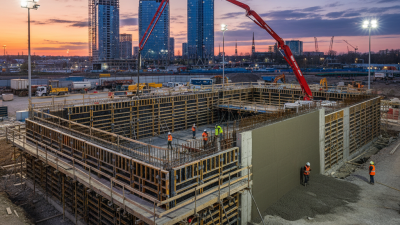
China’s construction market is large, active, and increasingly focused on efficiency. The National Bureau of Statistics of China recorded construction industry output of approximately RMB 31.6 trillion in 2023. That scale creates strong demand for safer, faster, and more reusable formwork systems.
Ceiling formwork is no longer just a temporary support frame. On a busy project, its quality affects slab accuracy, stripping time, labor use, and concrete finish. A practical system must fit narrow corridors, uneven floor plans, and repeated pouring cycles. Small details matter, including panel weight, adjustable props, joint gaps, and cleaning access.
This guide examines China’s top 10 ceiling formwork manufacturers through an engineering and procurement perspective. The assessment considers product design, material traceability, load documentation, manufacturing capacity, project experience, export service, and technical support. These criteria reflect common concerns discussed in reports from the China Construction Industry Association and international construction-equipment market studies.
The ranking is not absolute.
Public reports often group ceiling formwork with broader concrete formwork categories. Direct market comparisons are therefore limited. That limitation deserves attention. A manufacturer may appear strong in catalogs but perform differently on a 600-millimeter slab grid or a high-rise project with tight schedules. Buyers should verify test records, reuse claims, safety documentation, and completed project references before signing contracts. This article aims to offer a clear starting point, not replace site-based due diligence.
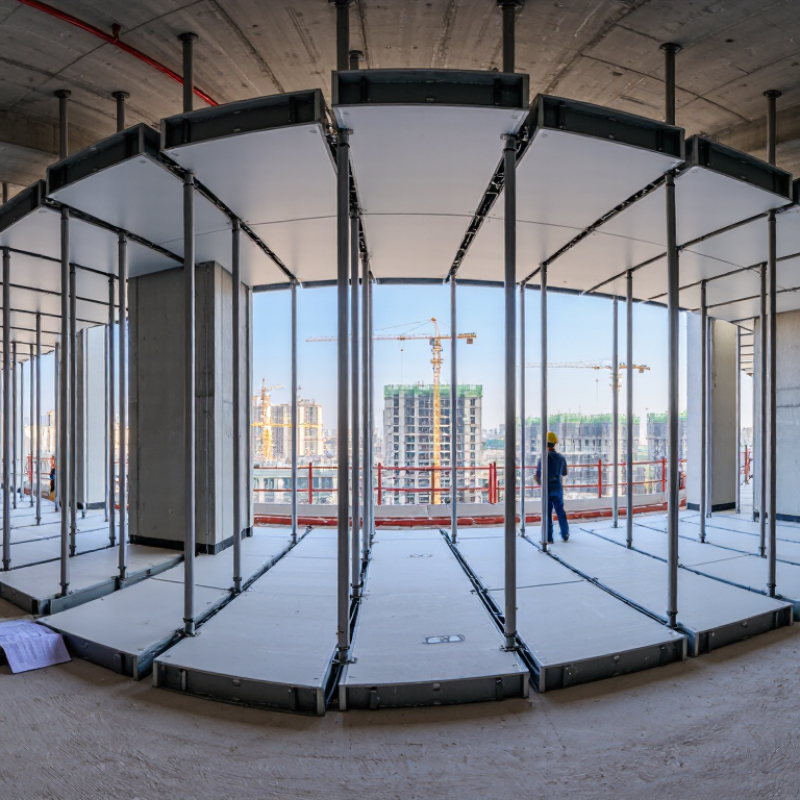
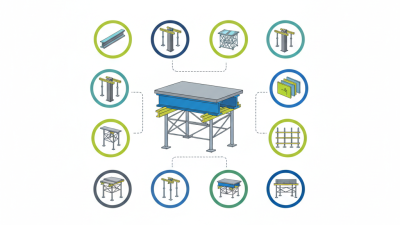
Ceiling formwork is a temporary mold and support system for casting reinforced-concrete slabs overhead. It usually combines plywood or metal panels, joists, adjustable props, and beam supports. Workers install it beneath the planned ceiling, check the level, place reinforcement, and pour concrete into the mold. After curing, the system is carefully removed and reused.
The method suits apartment floors, parking structures, offices, and industrial buildings. Modular panels can improve alignment and reduce cutting waste. A 2024 Research and Markets outlook estimated the global formwork system market would grow at about 4% annually through the decade, reflecting wider use of reusable construction systems. Productivity still depends on site conditions, crew training, and panel handling. Bigger is not always faster.
Safety needs practical judgment. OSHA recorded 1,075 construction fatalities in the United States in 2023; falls remained one of the leading causes. Properly designed props, stable foundations, guardrails, and inspection records are essential. Engineers should verify fresh-concrete loads, spacing, bracing, and stripping time against local standards. Rushing removal can create visible deflection or hidden cracks. That mistake is expensive. In my view, project teams sometimes focus too heavily on initial speed. A slower inspection may protect both the slab and the workers.
Evaluating China’s ceiling formwork manufacturers requires more than comparing prices. China’s National Bureau of Statistics reported construction industry output of about RMB 31.6 trillion in 2023. This scale creates strong manufacturing capacity, but quality still varies between suppliers. Check whether the manufacturer controls design, welding, surface treatment, and final inspection internally. Request load calculations, material certificates, dimensional inspection records, and test reports for each major component. A polished catalog is not proof.
Use project evidence. Ask for ceiling spans, slab thicknesses, installation methods, reuse cycles, and actual delivery records. Reusable formwork should remain stable after repeated assembly, not only during a factory demonstration. Compare panel flatness, connection accuracy, adjustment range, and safe working loads against the project specification and applicable Chinese or international standards. The International Organization for Standardization’s ISO 9001 framework can support process control, but certification alone cannot replace production audits. Visit the factory when possible. Look closely at storage conditions and unfinished welds.
Tips: Obtain three comparable quotations. Separate steel, accessories, engineering, packaging, and freight costs. Confirm lead times in writing, including replacement parts. Ask for a small sample or pilot bay before placing a large order. I would also review payment terms carefully. A cheap system may become expensive after site modifications, although this risk is easy to underestimate. One weakness in many evaluations is overreliance on online reviews. Independent inspection and a clear acceptance checklist provide stronger evidence.
This procurement evaluation model compares the main factors used when selecting a ceiling formwork manufacturer. The recommended weights total 100% and are intended for supplier screening, technical comparison, quotation review, factory auditing, and project risk assessment. They are not company rankings or market-share data.
China Top 10 Ceiling Formwork Manufacturers
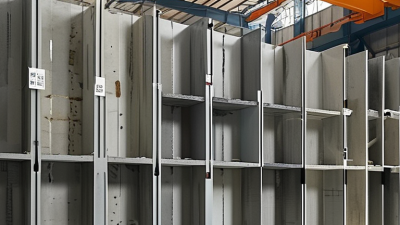
Choosing among the top 10 ceiling formwork manufacturers in China requires more than comparing prices. Reliable suppliers usually provide aluminum, steel, or plywood systems for different slab designs. Their technical teams should explain load capacity, panel dimensions, surface treatment, and installation procedures clearly. Factory audits can reveal welding quality, cutting accuracy, storage conditions, and production discipline.
In project evaluations, practical details often matter most. Check whether the manufacturer offers shop drawings, sample panels, replacement parts, and responsive engineering support. Ask for test reports and references from similar ceiling projects. A polished catalog is not enough. I have seen attractive proposals fail when delivery schedules were vague or accessories were poorly matched. That weakness deserves attention.
Tips: Request a trial assembly before placing a large order. Measure panel flatness, connection tightness, stripping ease, and concrete finish. Confirm packaging for humid transport and define inspection standards in writing. Do not choose the cheapest quotation automatically. A slightly higher initial cost may reduce labor, repairs, and site delays. Still, every supplier should be judged against your actual project conditions, because a system that performs well in one building may require changes in another.
| No. | Evaluation Dimension | Practical Industry Benchmark | Common Material or System | Relevant Reference or Verification Method | Why It Matters to Buyers |
|---|---|---|---|---|---|
| 1 | Load-Bearing Capacity | The system should provide documented allowable loads for panels, joists, bearers, and adjustable supports under the intended slab or ceiling configuration. | Aluminum panels, steel frames, timber beams, adjustable steel props | Check structural calculations, test reports, design assumptions, and project-specific load tables. | Reduces the risk of excessive deflection, instability, and construction accidents. |
| 2 | Panel Dimensional Accuracy | Manufacturing tolerances should be controlled consistently so adjacent panels align without visible steps, gaps, or excessive joint filler. | Aluminum alloy, coated steel, plywood-faced panels | Verify inspection records, sample measurements, edge straightness, flatness, and connection compatibility. | Improves ceiling surface quality and reduces finishing work after stripping. |
| 3 | System Reusability | Reusable formwork should be designed for repeated assembly, stripping, cleaning, and repositioning without permanent deformation. | Modular aluminum or steel formwork systems | Request documented reuse guidance, maintenance procedures, and project references with comparable cycle requirements. | Higher reuse potential can lower formwork cost per construction cycle. |
| 4 | Surface Finish | The contact face should be smooth, cleanable, and sufficiently rigid to produce a uniform concrete surface when correctly installed. | Powder-coated aluminum, galvanized steel, film-faced plywood | Review finished-surface samples and confirm the required concrete finish specification before ordering. | Helps control honeycombing, imprinting, joint marks, and repair requirements. |
| 5 | Adjustability and Compatibility | A practical system should accommodate common ceiling dimensions, beam layouts, openings, drops, columns, and service penetrations. | Modular panels, infill panels, telescopic props, adjustable beam systems | Compare the supplier's layout drawings, adjustment range, connection details, and available infill solutions. | Minimizes custom fabrication and makes the system suitable for varied floor plans. |
| 6 | Safety and Stability | The complete system should include secure connections, bracing provisions, anti-slip features, safe access arrangements, and clear erection procedures. | Steel props, frame scaffolds, modular aluminum support systems | Check method statements, risk assessments, installation manuals, and compliance with applicable local construction rules. | Supports safe installation, concrete placement, stripping, and material handling. |
| 7 | Corrosion Protection | Steel components should have a suitable protective treatment for the intended environment, while aluminum components should be protected from incompatible contact and contamination. | Galvanized steel, painted steel, anodized or coated aluminum | Confirm coating specifications, surface-treatment process, storage requirements, and inspection documentation. | Extends service life and preserves connection performance during repeated use. |
| 8 | Installation Productivity | High-productivity systems use standardized components, fast-locking connections, clear numbering, and layouts that reduce manual cutting and modification. | Prefabricated modular formwork and integrated support systems | Compare installation sequences, crew requirements, lifting needs, and measured cycle-time data from similar projects. | Can shorten construction cycles and reduce dependence on highly skilled labor. |
| 9 | Logistics and Packaging | Components should be clearly identified, stackable, protected against damage, and supplied with packing lists and installation drawings. | Nested panels, bundled beams, labeled accessories, reusable transport racks | Review packing methods, container-loading plans, spare-part policy, and delivery inspection procedures. | Reduces missing parts, transport damage, site congestion, and installation delays. |
| 10 | Technical Support and Documentation | A qualified supplier should provide layout design, component schedules, load information, operating instructions, and after-sales support. | Design-assisted modular systems and project-specific formwork packages | Verify engineering capabilities, drawing formats, response procedures, training availability, and warranty terms. | Improves project coordination and helps ensure that the system is used as designed. |
China’s Top 10 Ceiling Formwork Manufacturers: Comparing Products, Technologies, and Manufacturing Capabilities
A useful top-ten comparison should examine more than catalogue prices. Ceiling formwork systems differ in panel weight, stripping time, load capacity, and adjustment range. The Grand View Research report on concrete formwork identifies modular and reusable systems as key growth areas through 2030. This supports closer attention to cycle efficiency, not just initial purchase cost.
Product design reveals practical experience. Aluminum panels can reduce handling effort, while steel systems often provide stronger resistance under repeated loading. Adjustable props, accurate corner connections, and smooth panel surfaces also affect ceiling quality. The ACI 347R guide stresses proper formwork design, inspection, and load control. A serious manufacturer should provide engineering calculations, assembly drawings, and site training. Small details matter.
Manufacturing capability needs separate verification. Buyers should inspect welding consistency, CNC cutting accuracy, coating thickness, and replacement-part availability. The MarketsandMarkets construction equipment research projects stronger demand for digital and modular production methods in the coming years. Some factories already use barcode tracking and automated cutting. Others still depend heavily on manual inspection. That difference can become visible on a busy project. My ranking would remain provisional without factory audits, sample testing, and feedback from contractors. Product brochures are useful, but they rarely show damaged panels, delayed deliveries, or difficult dismantling conditions.
Choosing among China’s top ceiling formwork manufacturers requires more than comparing prices. A reliable supplier should provide verified load calculations, material certificates, installation drawings, and test records. These documents reveal practical engineering ability. The 2024 AGC Workforce Survey reported that 94% of construction firms struggled to fill positions. Therefore, suppliers offering clear training and simple assembly can reduce site errors and labor pressure.
McKinsey research suggests modular construction may reduce project schedules by 20% to 50% when planning and factory production work together. Ceiling formwork can gain similar benefits, but only with accurate measurements and disciplined delivery. Check panel flatness, joint tolerance, reuse cycles, and coating durability. Ask for project references involving comparable spans, slab thicknesses, and climate conditions. A low quotation may hide weak accessories, delayed replacements, or expensive modification work. That deserves reflection.
Tips: Request a sample panel before signing. Confirm steel grade, plywood thickness, and allowable load. Ask who handles design changes. Review packaging photos and loading plans. Also, test the supplier’s response time with a small technical question. Slow answers may become serious during installation. I would not judge quality from factory photos alone. Visit the production line, inspect welding points, and compare actual dimensions with drawings. Independent inspection can add cost, but it may prevent larger losses later.